

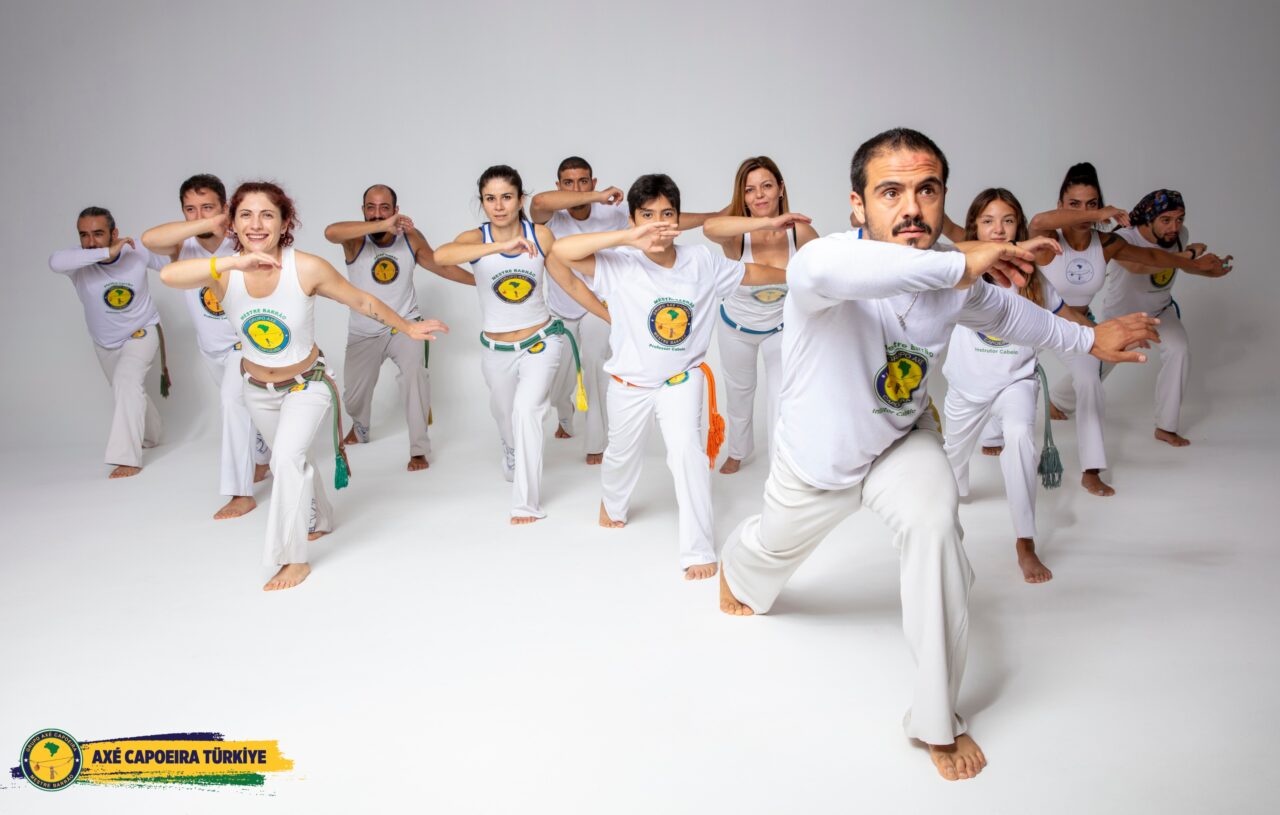
Axé Capoeira is one of the largest capoeira groups in the world today. The group’s schools teach in more than thirty countries, from Canada to Brazil and from Europe to Asia. The Axé Capoeira groups in Türkiye are part of this family.
The group’s story begins in Recife, a port city in north-east Brazil, with a boy growing up in a poor neighbourhood. In this article we tell the life of Axé Capoeira’s founder, Mestre Barrão, and how the group spread around the world.
A childhood in Recife
Mestre Barrão’s real name is Marcos da Silva. He was born in 1961 in Recife into a poor family. Recife is a city known for music and dance traditions such as frevo and maracatu and has a long capoeira history. Capoeira in Pernambuco developed with its own street tradition, different from that of Bahia.
Marcos started capoeira in 1974 with Mestre Pirajá. According to the sources, he also learned the finer points of street capoeira from Mestre Teté. In other words, he received disciplined training in the academy and also came to know the culture of the street roda.
His master: Mestre Pirajá
Mestre Pirajá was a master who taught capoeira in Recife and trained many students. According to the sources we consulted, Pirajá’s work and students in Recife were also the subject of a cordel text about capoeira in Pernambuco. Cordel is a tradition in north-east Brazil in which folk poetry is printed in cheap booklets; part of capoeira’s history lives on in these booklets.
It was Mestre Pirajá who gave Barrão the title of first-degree mestre in 1987.
1982: the championship and the birth of Axé
In 1982 the young Marcos took part in the national capoeira championship in Rio de Janeiro to test himself against the best opponents. Sources say that after his success at this championship, opportunities opened up for him to teach in schools, community centres and universities.
That same year, 1982, he founded Grupo Axé Capoeira in Recife. Axé is a word of Yoruba origin; in Afro-Brazilian culture it is used to mean strength, energy and good wishes. The ‘Axé!’ you often hear in the roda and in greetings comes from here.
Axé Capoeira teaches with a contemporary (contemporânea) approach that carries the heritage of both Capoeira Regional and Angola. We explain the difference between the two styles in our article Angola and Regional.
The journey to Canada
In 1990 Mestre Barrão was invited to perform at international children’s festivals in North America. The invitation took him to the Vancouver International Children’s Festival. After teaching briefly in Italy, he settled in Canada in 1992 and began teaching in Vancouver.
Over time Vancouver became the group’s international centre. Axé’s Vancouver academy is one of the first capoeira academies opened in Canada. One of Barrão’s first students in North America is still one of the group’s instructors today. The group’s main academy in Vancouver is now run by Barrão’s son, Contramestre Barrãozinho, while according to the sources Mestre Barrão also opened an academy in his home city of Recife in 2007.
Music and recognition
One of the things that made Axé Capoeira well known is its music. Mestre Barrão and the group have recorded ten albums, some featuring masters such as Mestre Burguês, Mestre Acordeon and Mestre Tonho Matéria as guests. Songs written by Barrão are sung today in the rodas of other groups too. You can find the lyrics on our Music page.
At a gathering in Curitiba in 2000 honouring the outstanding capoeiristas of the century, the masters counted Mestre Barrão among the great capoeiristas of the century. The group has also contributed to promoting capoeira through international encounters and performance videos.
Spreading around the world, and Türkiye
Today Axé Capoeira has schools in many countries, including Canada, Brazil, the USA, Mexico, Colombia, Peru, France, the United Kingdom, Czechia, Poland, Sweden, Russia, Belarus, Kazakhstan, Azerbaijan, China, Japan, Angola and Türkiye. The group speaks of more than ten thousand members.
In Türkiye, Axé Capoeira has been teaching for many years in Istanbul, Ankara, Bursa and other cities, with batizados and festivals held every year. You can get to know our group better on our Grupo Axé and Mestre Barrão pages.
Frequently asked questions
What does the word axé mean?
It is a word of Yoruba origin; in Afro-Brazilian culture it means strength, energy and good wishes. In capoeira it is also said as a greeting and a good wish.
Is Axé Capoeira Angola or Regional?
Axé is a contemporary (contemporânea) group drawing on the heritage of both styles. Depending on the rhythm played in the roda, the game is slow and close to the ground or fast and open.
Who is Mestre Barrão’s master?
He started capoeira in Recife in 1974 with Mestre Pirajá and received the title of mestre from him in 1987.
Join the Axé family
The story that began in Recife continues today in training halls in Türkiye. In Axé Capoeira Türkiye groups the first class is a free trial. Axé!
Read more
- Mestre Pastinha, CECA and the 1966 Dakar Festival
- What is a Batizado? How the Capoeira Cord System Works
New to capoeira? Start with our guide What is capoeira and how is it played?.
Contact us for a free trial class
For class times and venues, see your city’s page: Istanbul, Ankara, Bursa, Antalya, Trabzon, Sinop, Şanlıurfa. Axé!