

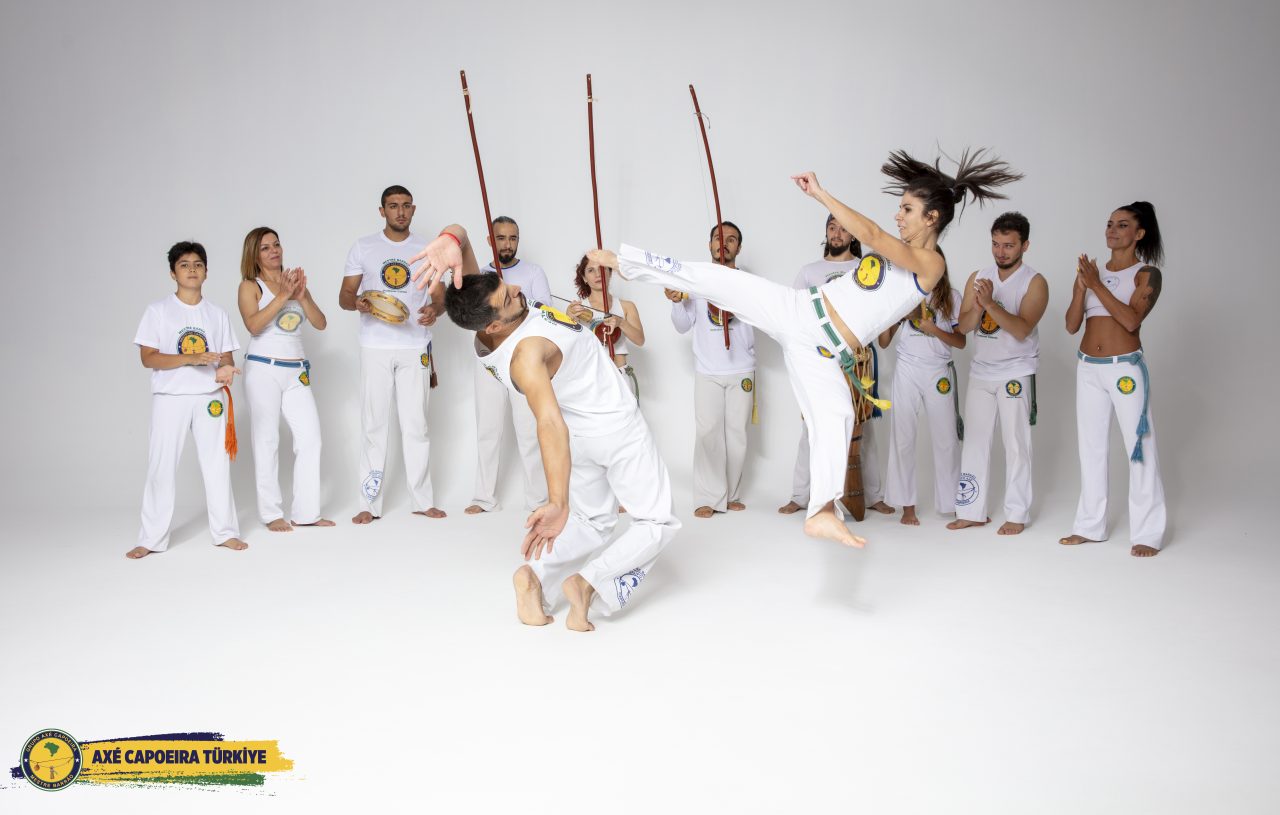
Looking at the history of capoeira, two founding figures stand out: Mestre Bimba, who developed the Regional style, and Mestre Pastinha (Vicente Ferreira Pastinha, 1889–1981), who institutionalised the traditional game. Pastinha brought the traditional game, until then played in scattered form on the streets, under one roof, and through the academy he founded passed the philosophy of capoeira on to the next generations.
The Centro Esportivo de Capoeira Angola (CECA), which Pastinha founded in Salvador da Bahia, and his participation in the festival held in 1966 in Dakar, the capital of Senegal, were important steps in capoeira’s opening to the world. In this article we look at the founding years of CECA, the details in the archive records and the 1966 journey to Dakar in the light of the documents.
The founding and early years of CECA
According to Mestre Pastinha’s manuscripts and the accounts of Mestre Noronha, the foundations of CECA were laid around 1941. According to these accounts, the process began when another master handed over the running of a roda to Pastinha; however, different views place the exact date of this handover between 1941 and 1943.
Although the academy was effectively active from 1941, its official registration did not follow immediately. Notary and association records show that the school’s registration was completed around 1952. During the drafting of the statutes and the registration of the founders, there were also some administrative disagreements among the masters of the time.
Pastinha dressed his students in a yellow and black uniform. These were the colours of Ypiranga, the football club he supported. As we mentioned in our article Capoeira Angola and Capoeira Regional: What Are the Differences?, CECA became the main centre where the game’s lower, more strategic and rhythm-based form was preserved.
Capoeira for everyone
Mestre Pastinha has a famous saying: ‘Capoeira is for men, women and children.’
The 1966 Dakar Festival and the Brazilian delegation
In April 1966 the 1st World Festival of Black Arts (Premier Festival Mondial des Arts Nègres) was held in Dakar, the capital of Senegal. The event aimed to make visible the cultural ties between newly independent African countries and the diaspora.
Through the initiatives of the Brazilian Ministry of Foreign Affairs and Waldir Freitas Oliveira, director of the Centro de Estudos Afro-Orientais (CEAO), an official Brazilian cultural delegation was formed. Alongside writers and artists, it included a capoeira group from Bahia.
- Mestre Pastinha (leading the group)
- João Grande (Pastinha’s leading student)
- Camafeu de Oxóssi (musician and capoeirista)
- Gato Preto
- Roberto Satanás
- Gildo Alfinete
A roda in Dakar: a Mestre at the atabaque
When they went to Dakar, Mestre Pastinha was 77 years old and had severe vision loss. According to oral history interviews with Mestre João Grande and Mestre Gildo Alfinete, Pastinha did not step into the roda and play during the festival performances.
Instead, Pastinha sat at the edge of the orchestra and played the atabaque, the hand drum we describe in detail in our article Capoeira Musical Instruments: Berimbau, Pandeiro, Atabaque and More, keeping the rhythm for the group. The game itself was performed by the younger masters João Grande, Gato Preto and the others.
This journey was the first institutional and international return of an African-rooted practice to the continent where its roots lie. For this reason the event also became a subject of traditional Capoeira Angola songs such as ladainhas and chulas, which recall with reverence Pastinha’s journey to Dakar and his setting foot on African soil.
Frequently asked questions
When exactly was CECA founded?
By most accounts the academy’s activities began between 1941 and 1943, while the official registration of its statutes took place around 1952 according to the records.
Did Mestre Pastinha play in Dakar himself?
According to his students and the other masters in the delegation, because of his age and vision loss he did not enter the game, but kept the rhythm in the roda by playing the atabaque.
Who was in the Dakar festival delegation?
Besides Mestre Pastinha, it included João Grande, Camafeu de Oxóssi, Gato Preto, Roberto Satanás and Gildo Alfinete.
Capoeira from tradition to today
The tradition Mestre Pastinha nurtured in his modest academy in Pelourinho lives on today in training halls all over the world. Capoeira is a rich cultural heritage that brings rhythm and movement together.
If you would like to learn the basic steps of this deep-rooted game, play along with the berimbau rhythm and get your body moving, you can join our classes. In the first class, even just clapping along lets you breathe in the atmosphere.
Read more
- The Story of Axé Capoeira: Mestre Barrão from Recife to the World
- The 1890 Penal Code: Article 402, Which Made Capoeira a Crime
New to capoeira? Start with our guide What is capoeira and how is it played?.
Contact us for a free trial class
For class times and venues, see your city’s page: Istanbul, Ankara, Bursa, Antalya, Trabzon, Sinop, Şanlıurfa. Axé!