

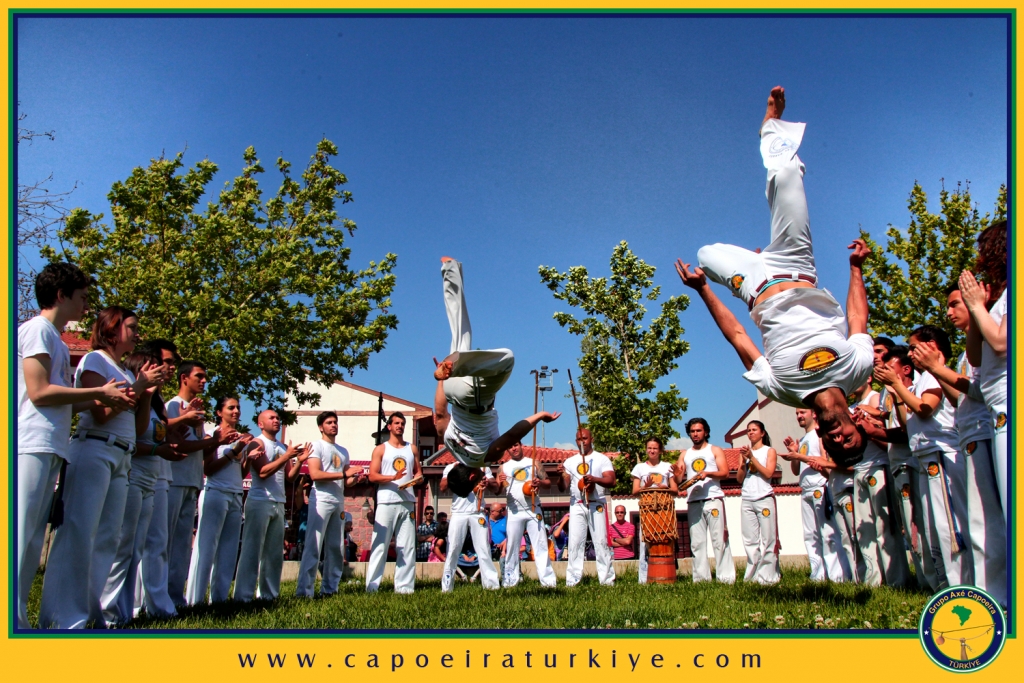
Capoeira, which is taught in schools today and is on the UNESCO list, was banned by law in Brazil for about fifty years. The basis of the ban was the Penal Code issued by Decree no. 847 of 11 October 1890. Article 402 of the code named capoeira explicitly and prescribed prison sentences.
In this article we explain what the article said, how the penalties were applied and how capoeira emerged from the ban. Much of the information comes from the text of the law and from research on the court records of the time.
Before the law
Slavery was abolished in Brazil on 13 May 1888. A year later, in November 1889, the monarchy fell and a republic was proclaimed. The new government made public order on the streets a priority, especially in Rio de Janeiro. At the time, capoeiristas in Rio were organised into groups called maltas, and newspapers associated capoeira with street fights and knives.
The police had moved even before the law was passed. Rio’s police chief, Sampaio Ferraz, had hundreds of capoeiristas arrested in the first months of 1890; many were sent to the Atlantic island of Fernando de Noronha. Researchers note that by the time the Penal Code came into force, the malta structure in Rio had largely been broken up. We return to this post-abolition period in our Lei Áurea article.
What did Article 402 say?
Chapter XIII of the code was titled ‘Of vagrants and capoeiras’. Article 402 made it a crime to perform, in streets and squares, ‘the exercises of agility and bodily skill known as capoeiragem’. In the same sentence it also listed running around with weapons or instruments capable of injury, causing disorder and frightening people.
The penalty was two to six months of cellular imprisonment. Belonging to a group was an aggravating factor; those considered the head or ringleader of a group received double the penalty. The language of the law is striking: capoeira was made a crime for its movements alone, even if not part of a fight.
Whom did the law target?
Article 402 sat in the same chapter as ‘vagrants’. The articles just before it made idle wandering, that is vagrancy, a crime. Passed two years after the abolition of slavery, this provision directly affected people left unemployed in the cities, most of them Black and poor.
Many researchers of capoeira history emphasise that the article criminalised a cultural practice and served to maintain a social order that still bore the marks of slavery. In Brazil today the article appears in secondary-school exams as an example of how culture was criminalised.
The law did not define what capoeira was either. The phrase ‘exercises of agility and bodily skill’ was very broad. So it was often the police who decided who was doing capoeira; in the files of the period it is often unclear whether those caught in the street were really playing the game or fighting.
Articles 403 and 404
Two further articles completed Article 402:
- Article 403: Repeat offenders were sentenced to one to three years in penal colonies on remote islands or in border regions. Foreign capoeiristas could be deported at the end of their sentence.
- Article 404: If someone was killed or injured during capoeira, the penalty for capoeira was added on top of the penalty for that crime.
The difference between Rio and Salvador
The law applied to the whole country, but enforcement varied from city to city. Rio de Janeiro was the capital and police repression was harshest there; the malta tradition largely came to an end in this period.
In Salvador capoeira lived on mostly among dock workers, market traders and festival crowds. Although capoeiristas sometimes appear in police records on charges of fighting or disorder, capoeira was not cut off from street culture. This continuity played a big part in Mestre Bimba and Mestre Pastinha being able to take capoeira indoors in the 1930s. We tell Pastinha’s story in our article Mestre Pastinha, CECA and the 1966 Dakar Festival.
How was the ban enforced?
The law did not stay on paper. Some of those convicted under Article 403 were sent to the Dois Rios correctional colony on Ilha Grande, off Rio. Among the examples compiled by researchers are sentences of two years in 1909 and fifteen months in 1915. Convictions based on Articles 402 and 403 can be found as late as 1933.
A study of court files in Rio found 69 files opened on charges of capoeiragem in the law’s last twenty years (1920–1940), almost all based on Article 402. Most of the statements in the files repeat the text of the law, suggesting that the charge was often written in boilerplate language.
In Bahia, repression was not as systematic as in Rio. In Salvador capoeira continued to be played around the port, in markets and during religious festivals, in the middle of the crowd.
What the years of the ban left on capoeira
Capoeiristas’ use of nicknames, or apelidos, instead of their real names is linked to this period; it was hard for the police to tie a nickname to a person. We describe the apelido tradition in our article the batizado and the cord system.
It is also said that the berimbau player in the roda would warn the others by changing the rhythm when the police approached. This story is widespread but not confirmed by documents; it lives in oral tradition, not in the records. We introduce the instruments in our article capoeira musical instruments.
Out of the ban
In the 1930s two masters in Salvador worked to give capoeira a respected place. Mestre Bimba opened an indoor academy in 1932, which was officially recognised in 1937. Mestre Pastinha founded his Capoeira Angola centre in 1941. We compare the two masters’ approaches in our article Angola and Regional.
The definitive change in the law came in 1940. In the new Penal Code issued on 7 December 1940, which came into force on 1 January 1942, capoeira no longer appeared as a crime. Capoeira was declared national cultural heritage in Brazil in 2008 and added to UNESCO’s list of the Intangible Cultural Heritage of Humanity in 2014.
Frequently asked questions
For how many years was capoeira banned in Brazil?
It was a crime in the Penal Code from 1890 until 1942, when the 1940 code came into force. In practice the easing began earlier, with the recognition of Bimba’s academy in 1937.
Did the law only ban fighting?
No. Article 402 made doing capoeira movements in the street a crime in itself. Carrying weapons and causing disorder were listed separately in the same article.
What is a penal colony?
Prison settlements where repeat offenders were put to work on remote islands or in border regions. The best known for Rio was the Dois Rios colony on Ilha Grande.
Was this law passed in the era of slavery?
No. Slavery was abolished on 13 May 1888; the Penal Code came two years later, in the first year of the republic. Capoeiristas were arrested in the era of slavery too, but the 1890 law was the first national provision to make capoeira a crime by name.
Enter the roda knowing the history
A game that once could land you in prison just for playing it in the street is today an art anyone can learn in a training hall. In Axé Capoeira Türkiye groups the first class is a free trial.
Read more
- Capoeira in 19th-Century Rio Police Records: What Do the Documents Tell Us?
- Nagoas and Guaiamuns: Who Were Rio’s Capoeira Maltas?
New to capoeira? Start with our guide What is capoeira and how is it played?.
Contact us for a free trial class
For class times and venues, see your city’s page: Istanbul, Ankara, Bursa, Antalya, Trabzon, Sinop, Şanlıurfa. Axé!