

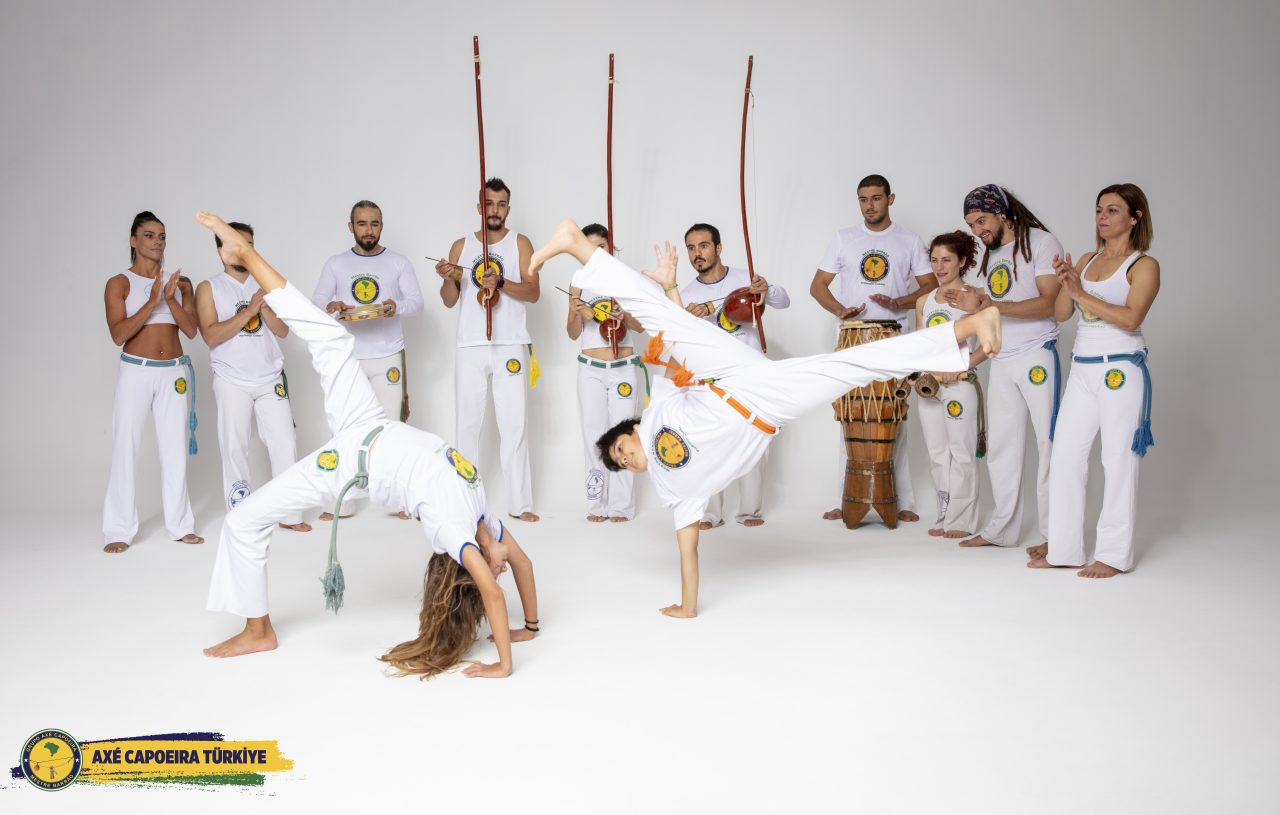
Today we play capoeira in training halls, in the roda, with music. In 19th-century Rio de Janeiro, however, capoeira was associated with groups organised on the street. These groups were called maltas, and they divided the city’s neighbourhoods between them.
In the last years of the Empire these maltas came together under two large alliances: the Nagoas and the Guaiamuns. In this article we tell what the sources say about these two groups, their relationship with politics and what happened to them after 1890. If you’re curious about the police records side of the story, see our article on 19th-century Rio police records.
What is a malta?
Malta was the name in 19th-century Rio for a capoeira group tied to a neighbourhood. According to the sources, maltas were mostly organised around a church square and the surrounding streets. The neighbourhood’s name usually came from that church or area.
Members of the maltas included slaves, freedmen, people born in Africa and people born in Brazil; it is said that Portuguese immigrants joined over time as well. The groups defended their own territory and clashed with rival maltas in the street.
A malta’s strength depended on the size of its neighbourhood and the number of its members. Some maltas controlled a few streets, others a whole district. As the city and its population grew, so did the number of maltas; historians describe this period as the time when capoeira was most visible in Rio.
Two great alliances: the Nagoas and the Guaiamuns
In the late Empire, the smaller maltas came together under two large umbrellas. The most detailed description of these two alliances appears in Plácido de Abreu’s book Os Capoeiras, published in 1886.
According to Abreu, the Guaiamuns were known by the colour red and the Nagoas by white. The Guaiamuns’ centre was the São Francisco malta, and the Santa Rita, Ouro Preto, Marinha and São Domingos de Gusmão maltas were also part of this alliance. On the Nagoas side, the Santa Luzia, São José, Lapa, Sant’Ana, Moura and Bolinha de Prata maltas are listed. There were also other small groups tied to each side.
- Guaiamuns: the colour red; centred on São Francisco
- Nagoas: the colour white; maltas such as Santa Luzia, São José, Lapa and Sant’Ana
- Each alliance had a chief, a deputy and its own internal division of roles (according to Abreu)
The chiefs: Leandro Bonaparte and Manduca da Praia
In his book Abreu also names the leading figures on both sides. At the head of the São Francisco malta, considered the centre of the Guaiamuns, was Leandro Bonaparte. On the Nagoas side, Manduca da Praia is named as chief of the Santa Luzia malta.
These names show that the maltas were not just anonymous crowds but groups with their own leaders and internal order. According to Abreu, each alliance had a chief, his deputy, members who kept order within the group, and ordinary members. The name of a malta chief was known to everyone in the neighbourhood.
Much of the information we have about these people today comes from novels, newspaper reports and police records. So it should also be noted that historians read the details of their life stories differently.
How did the maltas train?
According to Abreu’s account, new members trained on Sunday mornings. The Guaiamuns met at a gathering place on the Livramento hill. The Nagoas’ São José and Lapa groups trained on Russel beach, and the Sant’Ana group on the Pinto hill.
Training began with hands, head and kicks, then moved on to wooden sticks and finally to the knife. Some of the head-butts and kicks we see in today’s roda were already used in this period, but the setting was not the same as today’s game. If you’re curious about the moves as they are today, see our guide to the basic moves.
Rivalry and street fights
The rivalry between the two alliances was fierce. Abreu describes a custom in which a member of one side would spill a drink on the tavern floor and dance on it to provoke the other side; that gesture was enough to start a fight. The groups would give notice before a confrontation, and songs accompanied the fights.
Abreu also writes about deadly incidents between the two sides and the revenge killings that followed. Since these accounts appear in a novel, not every detail should be read as hard evidence; but the police records of the time also show that these clashes were real.
Relationship with politics
The maltas were not only street groups; at election time politicians used them. According to the sources, the Nagoas allied with the Conservative Party and the Guaiamuns with the Liberal Party. Both sides are associated with intimidation and fraud at the polls.
It is said that capoeiras were also part of the Guarda Negra, a group formed after the abolition of slavery in 1888 to support Princess Isabel. This link played a role in republicans seeing the capoeiras as a threat. For the end of slavery and its traces in capoeira songs, take a look at our Lei Áurea article.
The Republic and the great crackdown
The Republic was proclaimed on 15 November 1889. Rio’s new police chief, João Batista Sampaio Ferraz, began arresting and deporting capoeiras without waiting for court rulings. According to the sources, on 3 January 1890 a warship took 154 capoeiras, among them well-known malta chiefs, to the Atlantic island of Fernando de Noronha.
The new Penal Code adopted on 11 October 1890 made capoeira a crime in the chapter titled ‘Of Vagrants and Capoeiras’. We explain the details of this article in our 1890 Penal Code article. After this crackdown, the names Nagoas and Guaiamuns become increasingly rare in the sources; the maltas broke up and capoeira’s street form in Rio largely came to an end.
Some of those deported stayed on the island for years, others scattered to other cities. Traces of capoeiras who left Rio are said to have been found in cities such as São Paulo. And when capoeira re-emerged in the following decades, especially in Bahia, it would be organised not as street gangs but as schools and rodas.
Frequently asked questions
What do Nagoas and Guaiamuns mean?
They are the names of the two great alliances into which the capoeira maltas of Rio de Janeiro gathered at the end of the 19th century. There are different interpretations of the words’ origins; there is no definitive explanation.
Are the maltas connected to today’s capoeira groups?
There is no direct continuity. Today’s schools and groups come from the teaching tradition founded in Bahia in the 20th century by Mestre Bimba and Mestre Pastinha.
Where does this information come from?
The main sources are Plácido de Abreu’s 1886 book, the police and court records of the time, and the work of historians who have studied these documents.
Looking back from today’s roda
The story of the maltas shows that capoeira did not come from an easy past. After bans, deportations and street clashes, capoeira moved in the 20th century into schools, rodas and music. The game we play in the training hall today is the result of this long road.
If you’d like to get to know this history in your own body, through music and in the roda, we look forward to seeing you in class.
Read more
New to capoeira? Start with our guide What is capoeira and how is it played?.
Contact us for a free trial class
For class times and venues, see your city’s page: Istanbul, Ankara, Bursa, Antalya, Trabzon, Sinop, Şanlıurfa. Axé!